Three Cheers, One Finish Line: A Spectator's Transit Plan for Busan Race Day
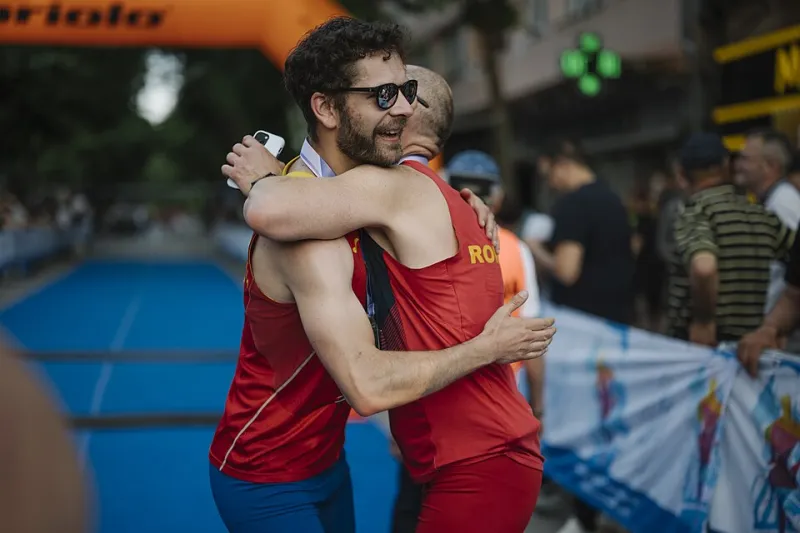
Photo: Shixart1985, CC BY 2.0, via Wikimedia Commons
Cheering at a race sounds like the easy job. Stand somewhere, yell, hold a sign, hug your runner at the end. Then you get to Busan, the roads close at dawn, the course hugs the coastline for miles, and the person you came to see blows past you at a pace you did not expect while you are still figuring out which side of the barrier you are on.
Good news: Busan is one of the more spectator-friendly marathon cities in Asia, and not because of anything the race organizers do for you. It is because the subway does the work a rental car cannot. With a transit card, a charged phone, and a plan mapped out before sunrise, you can catch your runner three times, eat a real lunch, and still be at the finish line before they are.
Know the shape of the day before you plan anything
Busan's flagship fall race starts in waves from roughly 7 to 8 a.m., which means your alarm is set for 4:30 and you will be standing in the dark wondering why you agreed to this. The Busan International Marathon has historically started near the Bexco and Centum City convention district and finished at Asiad Main Stadium in Sajik — a route that runs east-to-west along the water before turning inland. Courses get tweaked year to year, so pull up the current map from the official race site two weeks out and screenshot it. Signal in a crowd of 25,000 people is not your friend.
One regional note for American spectators: Korean races tend to be stricter about road closures and tighter on course access than U.S. races. There is no wandering onto the course for a photo. Find your spot early, stay behind the barrier, and accept that the sidewalk you scouted on Google Maps may be closed.
The three cheer zones that actually work
Ignore the temptation to chase. Pick three points, and pick them for transit access rather than sentiment.
Zone 1: The early miles. Somewhere in the first 5 to 8 kilometers, near the start. Runners are still running on adrenaline and looking for familiar faces. This is where a sign does the most good.
Zone 2: The middle. Around 15 to 20 kilometers, near Gwangalli Beach or Millak. It is flat, it is loud, and — critically — it is a short walk from a Line 2 station. This is your glamour shot: the beach, the bridge, your runner, all in one frame.
Zone 3: The dark miles. Kilometers 30 to 35, where the race stops being fun. This is where you matter most. Runners in this stretch are not looking for a party, they are looking for one person who knows their name.
Moving between points without a car
The Busan Metro is clean, cheap (about a dollar and change per ride with a T-money card), and signage is in English. What it is not, on race morning, is empty. Expect the Line 2 platforms at Haeundae and Gwangan to be shoulder-to-shoulder with spectators who had the same idea.
- Gwangalli to Seomyeon: Line 2, direct, roughly 20 minutes.
- Haeundae to Gwangan: Line 2, direct, roughly 15 minutes.
- Centum City to Gwangalli: Line 2, about five minutes. This is the single most useful transfer on the course.
- Seomyeon to the finish at Sajik: Line 1 to Yeonsan, transfer to Line 3, exit at Sports Complex. Budget 20 minutes plus walking.
Budget 40 minutes between any two cheer zones, door to barrier. Taxis are cheap in Busan by U.S. standards but useless on race morning; the same closures that make the course scenic make the roads a trap.
The half marathon spectator plan
Half courses in Busan tend to stay in the eastern half of the city — Haeundae, Gwangalli, the Centum City corridor — which is a gift. Plan it like this:
- Start area, 6:40 a.m. See them off, take the photo, let them go.
- Cheer 1, kilometer 5. Walk or ride one stop. You will get there with time to spare.
- Cheer 2, kilometer 14 to 16. Line 2 gets you there in under 15 minutes.
- Finish. Leave your second spot with 45 minutes of buffer and head straight to the stadium. Half marathoners finish faster than your mental math suggests.
The full marathon spectator plan
Same skeleton, more patience:
- Start, 6:30 a.m.
- Cheer 1, kilometer 6 to 8. Quick and early, then move.
- Cheer 2, kilometer 18 to 20. The last time they will look genuinely happy. Get the good photo here.
- Cheer 3, kilometer 32 to 35. Bring the sign, bring the snack, say nothing complicated.
- Finish at Sajik. Be inside the stadium area 30 minutes before their projected time. Meeting points afterward are chaotic; agree on one in advance and write it on your hand.
Coffee, lunch, and the bathroom problem
This is where a lot of spectators quietly fall apart. Busan solves all three if you pick your zones well. Gwangalli has cafes along the beach road open early, plus a convenience store on nearly every corner. Centum City has indoor bathrooms inside the mall complex — a legitimately strategic choice on a cold, windy November morning. Seomyeon and the Jeonpo cafe alley are your post-race lunch territory, and after the finish a bowl of pork soup or a plate of Gwangalli raw fish is the correct emotional reward.
One caution: do not plan on eating anywhere adjacent to the finish line in the first hour after the race. Every restaurant within walking distance is full, and the wait will be longer than your runner's last 10K.
Signs, phrases, and small kindnesses
Korean crowds respond well to a sign in hangul, even a wobbly one. "힘내세요!" (him-nae-se-yo) means something like hang in there. "거의 다 왔어요!" (geo-ui da wass-eo-yo) means you are almost there — save it for the last 5K, because saying it at kilometer 8 is a war crime.
Bring a plastic bag with a dry long-sleeve shirt or a light jacket. Busan in late fall can feel ten degrees colder at the finish line than it did at the start, and the single most appreciated thing a spectator can do is hand a shivering runner something warm within 30 seconds of the finish.
Finally, agree on a meetup point with no dependence on cell service. Korean race crowds crush mobile data, and the stadium area is the worst offender. Pick a specific gate, a specific sculpture, a specific corner. Your runner will have run 42 kilometers. Do not make them search for you.